Uncategorized

Canvas of Chaos: Transforming Addiction Into Abstract Art

Posted on by

Addiction is a deeply personal struggle, often marked by emotional pain, trauma, and a search for meaning that seems just out of reach. For many individuals, the road to recovery can feel like wandering through a storm. But what if that storm could be turned into something beautiful? At Straw Dawg Recovery & Wellness, we believe in healing through every dimension of the human experience. One powerful, yet often overlooked, path to healing is art—especially abstract art. When words fail, creativity speaks. And for those in addiction recovery, a canvas can become the bridge between pain and peace.

Art as a Healing Medium in Addiction Recovery

Why Art Therapy Works

Art is more than a hobby. It is a therapeutic tool that allows individuals to explore complex emotions in a safe, nonverbal way. In addiction recovery, this is critical. Trauma, shame, grief, and anxiety are often buried deep, hard to express, and even harder to release. Abstract art, in particular, gives room for raw, unfiltered expression. There is no pressure to “get it right.” There is only the opportunity to reflect, process, and begin to let go.

At Straw Dawg, our holistic approach to addiction treatment includes creative therapies that meet each client where they are. Whether you’re just beginning your journey or working to maintain sobriety, art therapy can help open doors to emotional breakthroughs that traditional talk therapy alone may not access.

From Addiction to Expression: What Happens on the Canvas

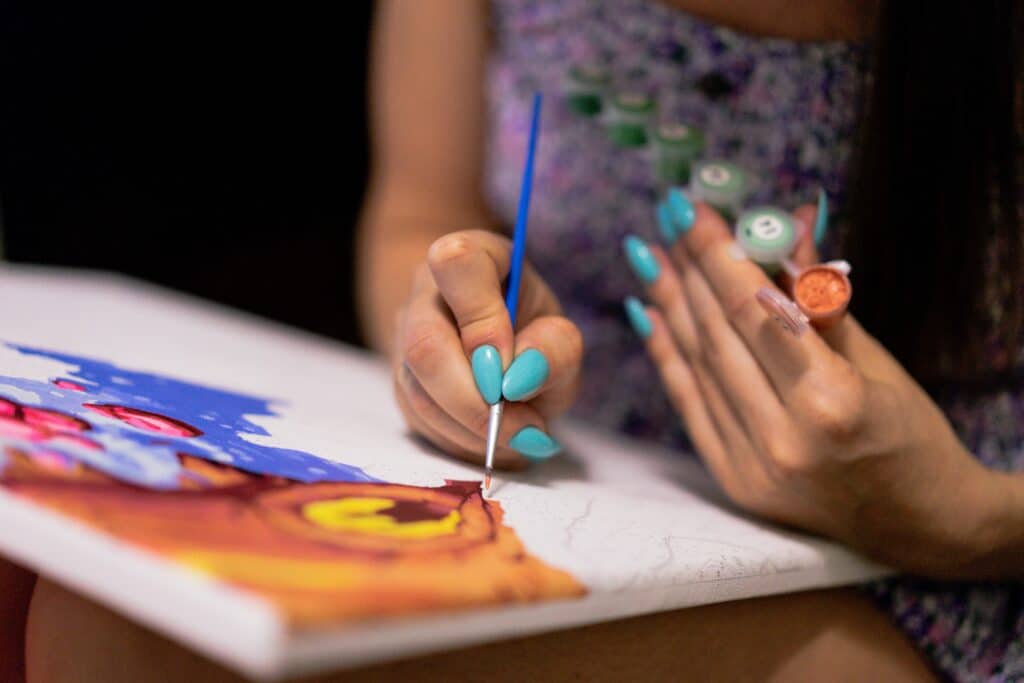
When someone in recovery begins to paint, especially in the abstract, they aren’t just creating art. They are releasing trapped feelings. A canvas covered in chaotic brushstrokes may reflect the confusion of withdrawal. A single, vivid color might represent the loneliness of early sobriety. These creations become personal timelines of transformation, each one capturing a moment of growth.

Clients often report a sense of peace and empowerment after a painting session. Even those who have never picked up a brush before find that expressing themselves visually offers a new perspective on their healing process. The act of creating something from emotional chaos provides hope and direction—a reminder that beauty can come from brokenness.

Holistic and Individualized Care That Honors Creativity

At Straw Dawg Recovery & Wellness, we recognize that no two people are the same. That’s why our addiction recovery programs are designed with individual needs in mind. Whether you choose our inpatient or outpatient services, we incorporate art-based therapies alongside proven clinical practices, spiritual growth opportunities, and personalized mental health care.

Our faith-based and holistic model supports healing not only of the body, but of the mind and soul. Creative expression, including abstract art, plays a central role in helping clients build emotional resilience and reconnect with their sense of self.

Real Transformation Begins Within

Art may not solve every problem, but it can start a powerful conversation between who you are and who you want to become. If you or someone you love is struggling with addiction, it’s important to know that healing doesn’t look the same for everyone. Some find their path through words, others through silence. Some heal through movement. And some through color, shape, and texture.

Take the First Step Toward Healing

Recovery is not about perfection. It’s about progress. At Straw Dawg, we offer compassionate, professional care that sees the whole person—not just the addiction. If you are ready to start your journey, we are here to walk with you every step of the way. Let us help you turn your chaos into a canvas of strength, purpose, and renewal.

Contact us today to learn more about our personalized treatment programs and how creative therapies can support your recovery.

Strokes of Survival: How Painting Helped Me Break Free from Addiction

Posted on by

Addiction is often described as a prison—a cycle of pain, shame, and dependency that feels impossible to escape. For years, I lived in that cycle, losing myself piece by piece. But in my search for freedom, I found an unlikely savior: painting. With every brushstroke, I began to break free from addiction, transforming my pain into a visual journey of survival and healing.

Falling Into Addiction

My story with addiction didn’t begin with a single event; it was a gradual slide. Stress, trauma, and the pressure to perform built up over time, and I turned to substances as a way to cope. What started as a temporary escape became a daily ritual of self-destruction. Friends drifted away, my health declined, and my creativity—a part of me that once defined who I was—faded into the background.

I stopped creating art altogether. My canvases sat untouched, gathering dust. I told myself I was too busy, too tired, too broken to paint. In truth, I was afraid. Afraid to face myself. Afraid of what would come out if I tried to express what I was feeling.

Finding the Brush Again

Recovery began when I finally reached out for help. It wasn’t easy. Admitting I had a problem felt like tearing off a mask I had worn for years. In therapy, I was encouraged to reconnect with something I loved—something that could help me process emotions I had long buried. For me, that was painting.

At first, I resisted. I thought I had forgotten how to paint. But one day, with trembling hands, I picked up a brush and let the colors flow. I didn’t plan what I was painting. I just let the emotions guide me. The result was messy, chaotic, and raw—but it was real.

The Healing Power of Art

Painting became my daily ritual. Each canvas was a safe space where I could express my struggles without judgment. I painted my fears, my cravings, my guilt, and, slowly, my hope. Through art, I found a way to release emotions that words couldn’t capture. The canvas became my therapist, my journal, and my refuge all in one.

Over time, my paintings evolved. The dark, heavy strokes of my early recovery gave way to lighter tones and more deliberate forms. I began to experiment again, finding joy in the creative process instead of fear. Each new piece marked a step forward in my healing journey.

Sharing My Story

Today, painting remains a central part of my sobriety. I’ve shared my art in galleries, workshops, and recovery groups, hoping to inspire others who are struggling. My work tells the story of survival—not just surviving addiction, but reclaiming life, creativity, and self-worth.

Strokes of survival are more than just brushstrokes on canvas; they are acts of courage, moments of clarity, and symbols of resilience. Painting helped me break free from addiction, and in doing so, it helped me rediscover who I truly am.

Sketching a New Life: How Art Became My Escape from Addiction

Posted on by

Addiction has a way of making everything feel permanent—the pain, the shame, the emptiness. For years, I lived with the belief that I was trapped in a life I didn’t want, with no way out. But as unlikely as it seemed then, a simple pencil and a blank sketchbook would become the tools that helped me rewrite my story. Through art, I began sketching a new life—one filled with purpose, hope, and healing.

The Descent into Addiction

My addiction didn’t announce itself loudly. It crept in, disguised as relief. A drink to take the edge off. A pill to help me sleep. At first, it was manageable—until it wasn’t. Soon, substances were controlling every part of my day. My relationships fell apart, my health declined, and the things I once loved no longer mattered. Among them was my art.

Drawing had always been a comfort to me. As a child, I filled sketchbooks with ideas, characters, and emotions I couldn’t put into words. But addiction dulled that passion. I stopped drawing. My sketchbooks collected dust, just like the life I had abandoned.

Hitting Rock Bottom

The turning point came when I found myself alone, sick, and scared. I didn’t recognize the person I had become. Getting sober felt impossible, but staying the same felt even worse. With the help of friends and a support group, I entered treatment and began the hard work of recovery.

Part of my therapy involved creative expression. At first, I resisted. I hadn’t drawn in years, and I was afraid I had lost my touch. But eventually, I picked up a pencil again. It was shaky and uncertain, but that first sketch cracked open something inside me.

Drawing My Way Through Healing

As I worked through recovery, drawing became my refuge. It gave me something to focus on when the cravings hit. It helped me process emotions I couldn’t articulate. It gave shape to my grief, my fear, and slowly, my hope.

I started sketching daily—nothing fancy, just raw, honest work. I sketched my dreams, my regrets, my progress. Each page became a marker of how far I’d come. When I didn’t have the words for what I was feeling, I let the pencil speak for me.

Rebuilding Through Art

Art didn’t just fill the void left by addiction—it gave me a reason to keep going. I began to share my sketches with others in recovery, and the response was powerful. People saw themselves in my work. They felt less alone. And I realized I had something to offer beyond my pain.

Today, I continue to use art as a cornerstone of my recovery. I’ve held workshops, created a blog to share my journey, and connected with a community of artists who understand the healing power of creativity.

Sketching a new life hasn’t been easy, but it’s been worth every stroke. Art didn’t just save me—it helped me rediscover who I was all along. And for the first time in a long time, I’m proud of the picture I’m creating.

Masterpieces and Mistakes: My Story of Addiction and Recovery Through Art

Posted on by

Art has always been a part of my life—my escape, my identity, my voice. But there was a time when even the vibrant colors of the canvas couldn’t compete with the darkness I carried inside. My journey through addiction and recovery has been messy, full of both masterpieces and mistakes. But looking back, every painting and every misstep brought me closer to healing.

A Passion Overshadowed

As a young artist, I poured my heart into my work. I was driven, inspired, and constantly creating. But the pressure to succeed, coupled with unresolved emotional wounds, slowly chipped away at my confidence. I began to doubt myself—not just as an artist, but as a person. That’s when I turned to substances for comfort.

What started as casual use quickly spiraled into dependency. I told myself it helped my creativity, made me more “free.” But in truth, it numbed me. I became disconnected from my art, my loved ones, and eventually, from myself. I would spend days in a fog, too lost to pick up a brush. When I did manage to create, my work was chaotic and empty, lacking the passion that once defined me.

Mistakes That Taught Me

Addiction led me to make choices I never thought I would—alienating friends, missing opportunities, and breaking promises. I hurt people I loved and destroyed the trust others had in me. I made mistake after mistake, until I couldn’t recognize the person I had become.

But even in those dark moments, part of me still longed to paint. Occasionally, I would drag myself into the studio and smear my pain across a canvas. The results were raw, emotional, and sometimes hard to look at. But they were honest. Those pieces weren’t my best, but they were important. They reflected my truth.

Choosing Recovery—and Creation

Eventually, I reached a point where I knew something had to change. Recovery wasn’t easy. It involved confronting the pain I had buried and learning to forgive myself for the mistakes I made. But in those early days of sobriety, I returned to my art with a new purpose.

Painting became my therapy. Every brushstroke was a step forward, every color a feeling released. I gave myself permission to be imperfect, both in life and on the canvas. I stopped chasing perfection and started seeking truth. Through my art, I processed grief, anger, shame, and eventually, joy.

Finding Beauty in the Broken

Today, I still create from the heart, but the heart I paint from is healthier, wiser, and more compassionate. My journey has taught me that masterpieces don’t come from perfection—they come from authenticity. The mistakes, the relapses, the raw honesty—all of it contributes to the final work.

Sharing my story through art has helped others feel seen and inspired. If there’s one thing I’ve learned, it’s this: you can’t erase the past, but you can use it to create something beautiful. And in doing so, you heal—not just yourself, but others, too.

Art as Therapy: A Visual Artist’s Fight Against Addiction

Posted on by

Addiction is often a silent, isolating struggle—one that buries identity and drowns out the voice within. For me, that voice had always spoken through art. As a visual artist, painting was more than a profession or passion—it was how I connected with the world. But when addiction took hold of my life, that connection shattered. What I didn’t realize then was that the very thing I abandoned—my art—would become my lifeline to healing.

The Spiral into Addiction

My descent into addiction didn’t happen overnight. It started quietly, in the margins of stress, self-doubt, and emotional wounds I didn’t know how to face. I turned to substances to cope, to escape, to numb. What began as occasional use grew into a dependency that clouded every aspect of my life—relationships, health, career, and especially, creativity.

I stopped painting. My studio, once a haven, became a place of shame. Canvases sat blank, brushes untouched. I felt hollow, disconnected from the very part of myself that had always brought joy and purpose. The more I lost myself to addiction, the more I feared I’d never find my way back.

Rediscovering Art in Recovery

The first step toward recovery came with the decision to ask for help. Rehab and therapy opened doors I hadn’t expected—one of which was reintroducing creativity into my life. At first, the idea of returning to art felt overwhelming. How could I paint when I felt so broken?

But my therapist encouraged me to try—not to create something beautiful, but to simply express. So I began to paint again, slowly, cautiously. I let my emotions guide me rather than trying to control the outcome. Anger, fear, sadness, and guilt spilled out onto the canvas in chaotic colors and abstract forms. What emerged wasn’t always pretty, but it was honest. And it was mine.

Art as a Healing Tool

In time, painting became a daily practice—my own form of therapy. When words failed me, art spoke. It gave shape to pain I couldn’t articulate, helping me confront my demons without judgment. Through color, texture, and form, I found a way to process trauma, understand my triggers, and rediscover my identity beyond addiction.

Each piece I created in recovery marked a milestone in my healing. Some were dark and heavy, others surprisingly light and hopeful. But all of them were a part of my journey, visual proof that I was transforming.

Inspiring Others Through Creativity

Today, art is not just a tool for my own recovery—it’s a way to connect with and support others. I now lead art therapy workshops for people in recovery, helping them discover the healing potential of creative expression. In these spaces, I’ve witnessed the power of art to unlock emotions, build resilience, and foster hope.

Addiction tried to silence my voice, but through art, I found it again—louder, clearer, and more purposeful than ever. Art didn’t just help me survive; it taught me how to live again.

Breaking the Chains with a Paintbrush: An Artist’s Path to Sobriety

Posted on by

Addiction has a way of tightening its grip slowly—one decision, one distraction, one escape at a time—until you find yourself bound by chains you never meant to forge. For years, I lived in that place, trapped in a cycle of self-destruction. But through the haze of my darkest moments, there remained one quiet, persistent presence: art. What I once saw as just a form of expression became the very tool I used to break free. With a paintbrush in hand, I found my way back to myself and began walking the long road to sobriety.

Drowning in Dependency

I never imagined that something so small—a drink here, a pill there—could turn into something that would consume my life. But addiction doesn’t happen all at once; it creeps in. As the pressure of life and unresolved trauma piled up, I started turning to substances for comfort. What was once a tool to “take the edge off” became a necessity just to function.

The more I used, the more I lost. Relationships fractured. Opportunities disappeared. My passion for creating—once my greatest joy—vanished. My studio, once full of life, became a silent, abandoned space. I had the tools to create, but no will to use them. I was numb, not just to the world, but to myself.

A Brush with Redemption

It wasn’t a dramatic moment that started my recovery—no flashing lights or rock-bottom collapse. It was a quiet realization that I was wasting the one gift that had always made me feel whole. One night, in the midst of withdrawal and despair, I wandered into my studio and picked up a brush. I didn’t have a plan or a vision. I just painted.

That first piece wasn’t beautiful. It was messy, angry, and raw. But it was mine. For the first time in years, I felt something. And that feeling kept me going.

Art as a Lifeline

As I began the process of getting sober—with therapy, support groups, and honest self-reflection—painting became my daily ritual. The canvas became a space where I could release the emotions I didn’t yet know how to speak aloud. I poured my fear, guilt, and hope into every stroke.

Over time, the chaos in my work began to evolve. What started as violent splashes of color turned into more balanced compositions. I began to experiment again, to explore textures and stories. Each new piece was a testament to my recovery—a marker of where I had been and how far I had come.

Sharing the Journey

Today, I use my art to share my journey with others. Through exhibits, talks, and social media, I open a window into my past—not for pity, but for connection. I’ve learned that vulnerability is strength, and creativity is one of the most powerful tools we have to heal.

Breaking the chains of addiction wasn’t easy. But with a paintbrush in my hand, I discovered that I could shape my future one stroke at a time. My art saved me. And now, it helps me save others.

Painting Through Pain: An Artist’s Redemption from Addiction

Posted on by

Addiction is a thief. It robs people of their dreams, their relationships, and often, their very sense of self. For me, it almost stole my art—the one thing that had always made me feel most alive. But in the end, it was painting, the very act of creating, that became my path to redemption and recovery.

A Creative Spirit Lost

Growing up, art was my sanctuary. The blank canvas was a place where I could express my deepest emotions, my wildest dreams, and my unspoken fears. But as I grew older, life became more complicated, and so did my struggles. Anxiety, depression, and personal failures led me down a dark path. Substance abuse started as a temporary escape, a way to silence the noise in my head. Before I realized it, addiction had wrapped itself around me like chains.

As my dependency deepened, my creative spirit withered. My paintings grew sporadic and soulless. The passion that once guided my brush was replaced by numbness. I would stare at blank canvases, unable to find the spark that once came so naturally. My world became increasingly narrow, centered only around the next fix.

Rock Bottom and a Turning Point

The lowest point came when I lost everything I cared about—my relationships, my health, my career, and almost, my life. It was a moment of unbearable clarity. I knew if I didn’t change, I would lose the one thing that had always defined me: my ability to create.

Seeking help was terrifying. Recovery felt overwhelming and uncertain. But amid therapy sessions, support groups, and painful introspection, I was encouraged to reconnect with my passion. Hesitantly, I picked up a paintbrush again.

Painting Through the Pain

In the beginning, painting was painful. Every stroke was like tearing open old wounds. I painted not what I thought would be beautiful but what was real—anguish, guilt, loneliness. My canvases were raw, full of dark hues and chaotic lines, mirroring the storm inside me. But with every painting, I felt lighter, freer.

Art became my therapy. It gave me a space to confront my emotions without judgment. I didn’t need to find the perfect words to explain my pain; my hands could speak for me. Some days, I painted for hours, pouring every ounce of frustration and hope into my work. Other days, I simply stared at the canvas, letting it remind me that I was still alive, still fighting.

Redemption Through Creativity

Over time, my paintings began to change. The darkness began to lift. New colors emerged—softer tones, hopeful shapes, and more deliberate forms. My art was evolving, just as I was. It was a visible, tangible proof of my progress.

Today, painting is not just a creative outlet; it is my lifeline. I share my journey through exhibitions and community projects, using my story to encourage others battling addiction. Art taught me that redemption is possible, that healing is messy but beautiful, and that even in our darkest moments, we can find light.

Painting through pain saved me. It allowed me to transform my suffering into strength, to turn my story from one of loss into one of hope and redemption.

The Canvas of Recovery: Turning Addiction into Art

Posted on by

Addiction is often viewed as a cycle of despair and destruction, but for some, it can also be the beginning of a journey toward healing and self-discovery. For me, that journey unfolded not just through traditional recovery methods, but through the transformative power of art. The canvas became my confessional, my mirror, and my guide as I turned my addiction into inspiration and found new life through creativity.

A Life Consumed

Before recovery, my life was consumed by addiction. What began as casual use to escape emotional pain evolved into a daily battle for survival. My relationships deteriorated, my career faltered, and my sense of purpose all but vanished. I was numb, drifting through life without direction. The substances I relied on offered temporary relief but ultimately deepened my sense of hopelessness.

During that time, I stopped making art. My once vibrant studio collected dust, and the blank canvases became symbols of my own emptiness. I didn’t believe I had anything worth expressing, and I was too lost to even try.

Rediscovering the Brush

My recovery began with small steps—therapy, support groups, and a decision to change. In those early days, I was encouraged to find something that brought me peace. That’s when I picked up a paintbrush again. At first, it felt foreign. I hadn’t created anything in years. But as I began to paint, something inside me shifted. The canvas didn’t judge me. It welcomed every tear, every stroke of frustration, every burst of emotion I couldn’t voice.

Art became a lifeline. I began using color and form to process my journey. The early pieces were raw and intense—bold colors, heavy textures, and chaotic compositions. They were not pretty, but they were honest. They told the story of my pain, my longing, and my slow, uncertain crawl back to myself.

The Healing Process

As my recovery progressed, my art began to evolve. My palette shifted. The dark tones gave way to lighter shades, symbols of hope began to emerge, and I experimented with new techniques. Each painting reflected a piece of my healing—moments of breakthrough, self-forgiveness, and reclaimed identity.

Art allowed me to express what words couldn’t. It helped me confront my past without being consumed by it. With every canvas, I peeled back another layer of pain and found strength in vulnerability. Painting became both a ritual and a release—a sacred space where I could be completely honest with myself.

Sharing the Journey

Eventually, I began sharing my work. Exhibiting my art felt terrifying at first, but the response was overwhelming. People connected with my story, with the raw emotions in the brushstrokes. I realized that my pain could have purpose—not just for me, but for others.

Now, I use my experience to lead art therapy workshops for people in recovery. I’ve seen firsthand how creativity can open doors to healing, offering a voice to those who feel voiceless.

The canvas of recovery is not perfect. It’s layered, textured, messy, and beautiful—just like life. But it’s mine. And through it, I’ve found hope, healing, and a renewed sense of purpose.

Abstract Struggles: A Visual Artist’s Battle with Substance Abuse

Posted on by

For a visual artist, the act of creating is often more than just a craft—it’s a way of processing life, emotions, and experiences. But for many, addiction can hijack this creative process, leaving behind chaos instead of clarity. My journey through substance abuse was no different. It was a battle that consumed me and ultimately distorted the very art that once brought me peace.

The Descent into Addiction

Addiction is like a slow poison. It begins subtly, almost imperceptibly. What started as a way to numb emotional pain and cope with personal struggles eventually spiraled into a full-blown dependency. As I fell deeper into addiction, my world became increasingly distorted, much like the abstract works I once created. I was no longer in control of my own life, and my art reflected that—chaotic, fragmented, and broken.

During those years, my art went from being an outlet of expression to a shadow of its former self. My canvases were filled with dark, erratic brushstrokes, aggressive splashes of color that mirrored the internal turmoil I was experiencing. Yet, despite the outward appearance of my paintings, I found no solace in the act of creating. Art that once served as therapy now felt like a futile attempt to hold onto something that was slipping away.

The Struggle for Clarity

The deeper I fell into substance abuse, the more distant I became from my artistic self. Addiction clouded my judgment, took over my focus, and made me question my ability to create anything meaningful. I couldn’t find a way to break free from the fog, and my art became a desperate attempt to recapture the clarity and purpose I had lost. But each painting felt like an incomplete puzzle, a reflection of my fractured identity.

It was during one of my lowest points that I realized I had to make a choice: continue down this path of self-destruction, or fight to regain control of my life and my art. Recovery was not easy, but it was in that moment of clarity that I knew I had to reconnect with myself, starting with the one thing that had always helped me process my emotions—painting.

Reclaiming My Art

Recovery was a slow and arduous process, but through it, I rediscovered my love for art. I stopped focusing on creating for validation or perfection. Instead, I let go of the need to control the outcome and allowed the process to become a form of healing. As I worked through my recovery, my art slowly began to reflect my growth, from chaotic brushstrokes to more intentional marks that conveyed strength and resilience.

In this process, I learned that my struggle with addiction wasn’t something to hide or be ashamed of—it became a part of my story. I began incorporating elements of that struggle into my work, turning the abstract chaos of my addiction into a symbol of survival and transformation. The colors and shapes on my canvas were no longer simply a reflection of my pain, but also a representation of my recovery and the strength I had gained.

Inspiring Others Through Art

Today, I use my art to tell my story and connect with others who have faced similar battles. Through exhibitions, workshops, and outreach, I hope to show that recovery is possible and that art can be a powerful tool for healing. The abstract struggles that once defined my addiction have now become a testament to the resilience of the human spirit.

In the end, addiction may have tried to steal my creativity, but through struggle, I found my voice again—one brushstroke at a time.

From Darkness to Light: How Art Helped Me Heal from Addiction

Posted on by

Addiction is often described as a descent into darkness, a place where hope feels distant and life becomes a relentless cycle of self-destruction. For years, I found myself trapped in that darkness, struggling to break free. It wasn’t until I rediscovered art that I began to see the light and heal from the wounds that addiction had left behind.

The Struggle with Addiction

My battle with addiction started as an escape. What began as a way to cope with stress and emotional pain soon turned into a full-blown dependency. I became disconnected from the world around me, losing relationships, opportunities, and, most importantly, my sense of self. Days blurred into nights, and the creative spark I once had was extinguished by the overpowering grip of addiction.

During those years, I stopped creating. My sketchbooks remained untouched, my brushes dry. The artistic passion that once fueled me had faded, replaced by an endless pursuit of temporary relief. I felt lost, as if I had abandoned a vital part of myself.

Rediscovering Art in Recovery

The turning point came when I made the decision to seek help. Recovery was a difficult road, filled with moments of doubt and struggle. But in the process of healing, I slowly reconnected with the one thing that had always brought me joy—art.

At first, it was difficult. I stared at blank canvases, unsure of how to express myself. But as I allowed my emotions to flow through the brushstrokes, something changed. The pain, the anger, the guilt—they all found their place on the canvas. Each painting became a reflection of my journey, a way to process the complex emotions that words could not capture.

Art as a Healing Tool

Through art, I found a sense of purpose and stability. It became my therapy, helping me navigate the ups and downs of recovery. The act of creating allowed me to release the weight I had been carrying, transforming my struggles into something tangible and beautiful. With every piece, I reclaimed a part of myself that addiction had stolen.

Art also taught me patience and resilience. In the same way that a painting takes time to evolve, so does healing. There were days when my work felt chaotic and messy, much like my journey, but I learned to embrace the imperfections and keep going.

Inspiring Others Through Creativity

Today, I use my art not only as a personal healing tool but also as a way to inspire others. I share my story through exhibitions, workshops, and community projects, hoping to reach those who feel lost in their own struggles. Art has given me a voice, a way to connect with others who understand the battle of addiction and the power of recovery.

From darkness to light, my journey has been one of transformation. Art became my guide, leading me out of the shadows and into a place of healing, hope, and self-discovery. And for that, I am eternally grateful.


1 3 4 5 6 7 8